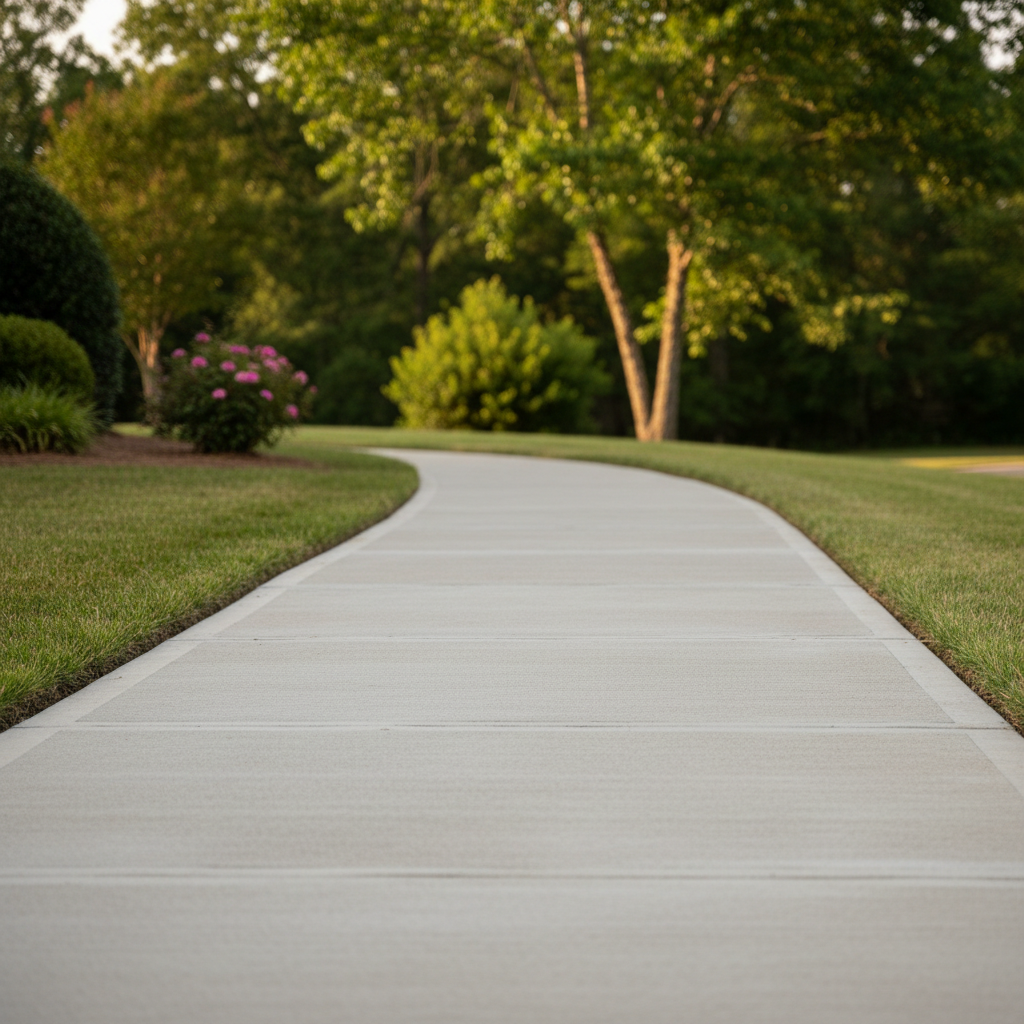
Walkways in Madison, AL sometimes shift and crack because of local soil conditions. Homeowners living around the Clift's Cove area or down near Hughes Road already know what North Alabama red clay can do to flatwork. Prime Concrete Co looks at some real answers to the questions homeowners frequently ask about concrete sidewalks.
Why does my concrete sidewalk keep cracking and sinking?
The ground underneath is the main cause of the issue. Local red clay expands heavily when it gets soaked by spring storms and shrinks into hard blocks during those dry August weeks. That constant shifting creates empty pockets beneath your walkway. When the soil drops away, the concrete loses its support and snaps under its own weight. Prime Concrete Co always stresses that a good sub-base of compacted gravel is just as important as the concrete mix itself.
How thick should a residential sidewalk actually be?
Four inches is the standard thickness for a normal residential walkway, and it is what most local building codes require. If you have a heavy zero-turn lawnmower or an RV trailer that you occasionally edge past the walk, go up to five or six inches on the reinforcement. Do not skimp on this part to save a few bucks on truck loads. Thin concrete over poorly prepped clay will break down in a couple of freeze-thaw cycles.
Do I need a permit to replace my front sidewalk in Madison?
If you are working entirely on your private property behind the property line, you generally do not need a city permit for a basic sidewalk replacement. However, if your walkway connects to the public municipal sidewalk near the street or crosses a utility easement, the City of Madison has specific rules you have to follow. Always check before you tear out old concrete near the public right-of-way to avoid costly headaches later.
When is the best time of year to pour new concrete here?
Spring and fall are ideal. Summer in Madison brings intense heat and humidity that makes the concrete set too fast, which can lead to shrinkage cracks if you are not misting it constantly. Winter can drop below freezing unexpectedly overnight, and frozen sub-grades will ruin a pour instantly. If you are planning a project, aim for those months when daytime temperatures hover in the seventies.
Should I seal my new sidewalk?
Yes, but do not do it the day after we pour it. Give the concrete at least thirty days to fully cure and dry out before applying a quality breathable sealer. Sealing helps block out moisture and keeps winter de-icing chemicals from pitting the surface. A good coat every two to three years will keep it looking clean and stop water from soaking right into the pores.
Can you pour new sidewalk over the old cracked slabs?
Pouring a thin layer of fresh concrete over broken, shifting old sidewalk is not recommended. It will just crack along the exact same lines within a year because the moving clay underneath has not been fixed. You need to tear out the old mess, haul it away, reshape and compact the sub-grade properly, and start fresh with a solid foundation.